❖ Version History ❖
Summer, 2025
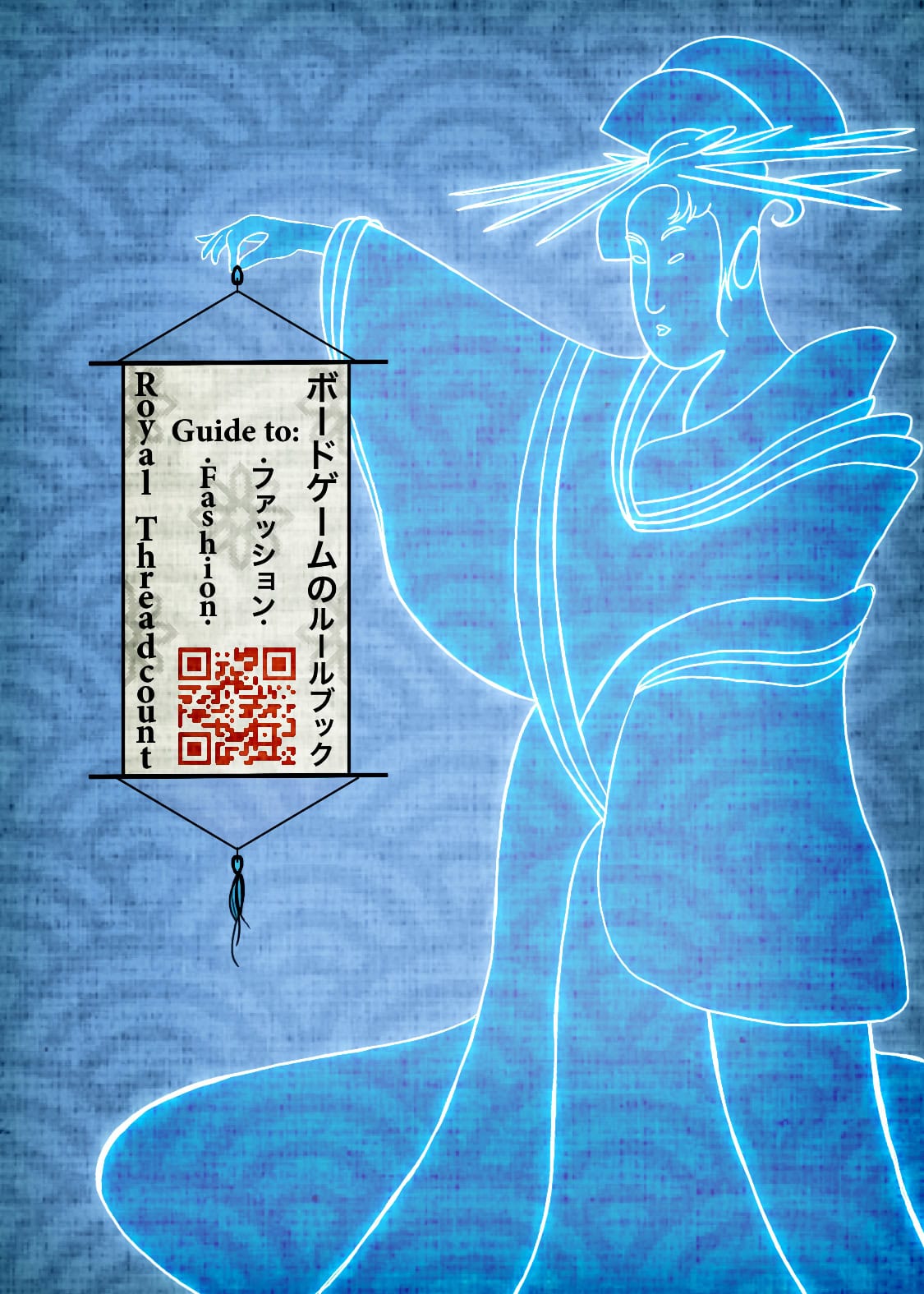
In our last post on the Librarium Games Design Journal, we began to tackle the layout & design of the Royal Threadcount Rulebook. Today, we are going to showcase the outcomes of those notes to share how things turned out on our first iteration of the digital design!
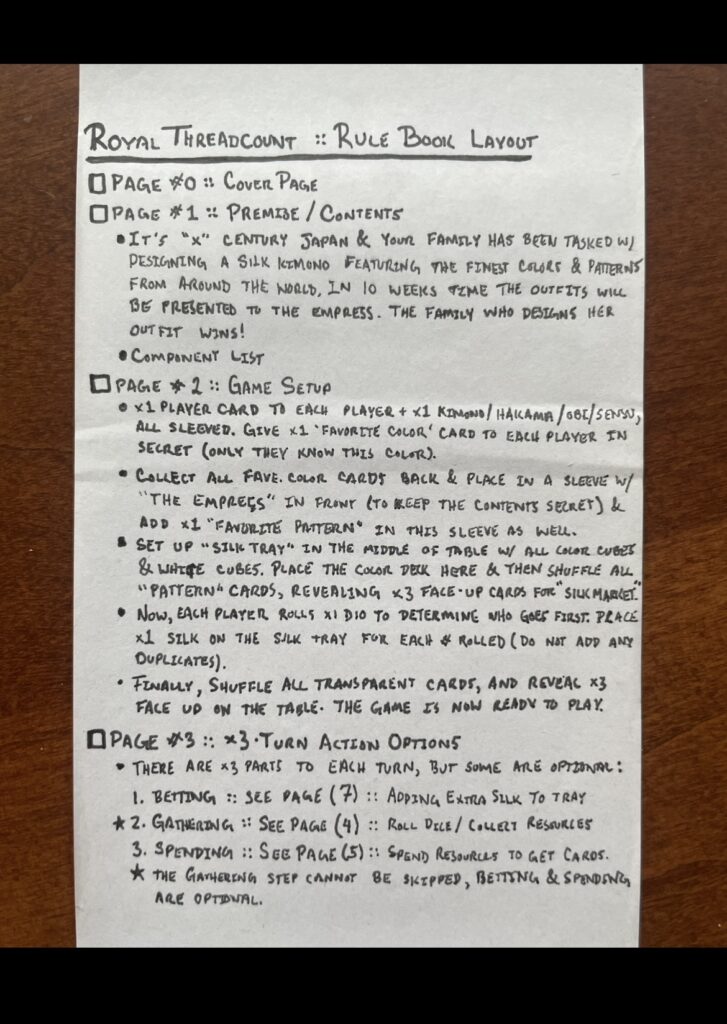
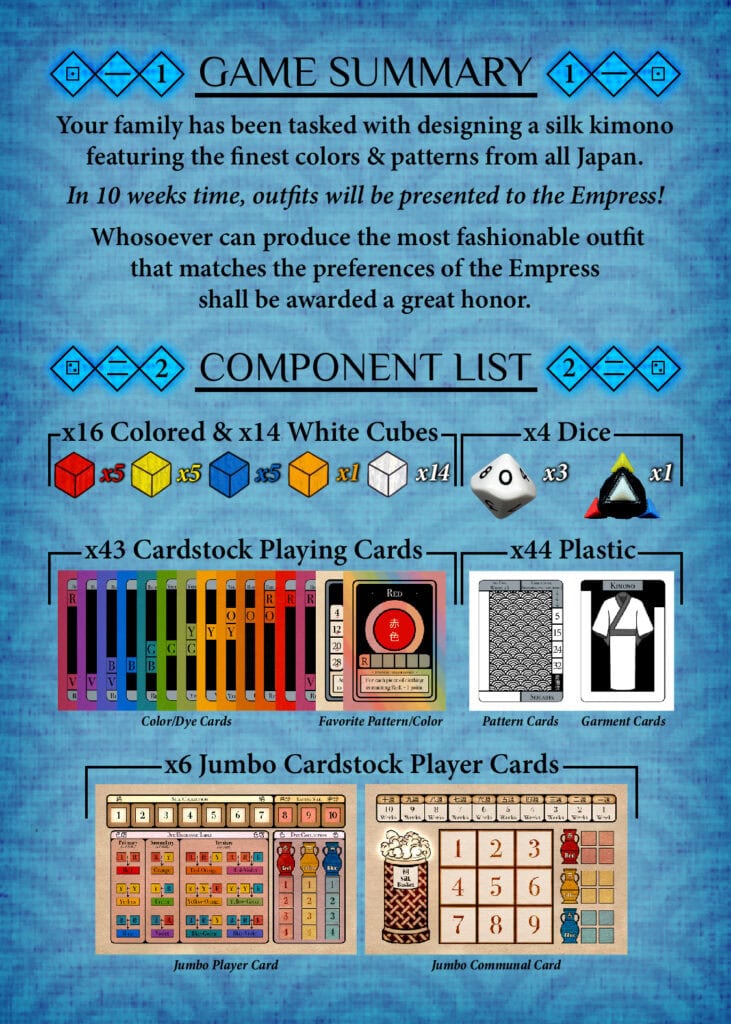
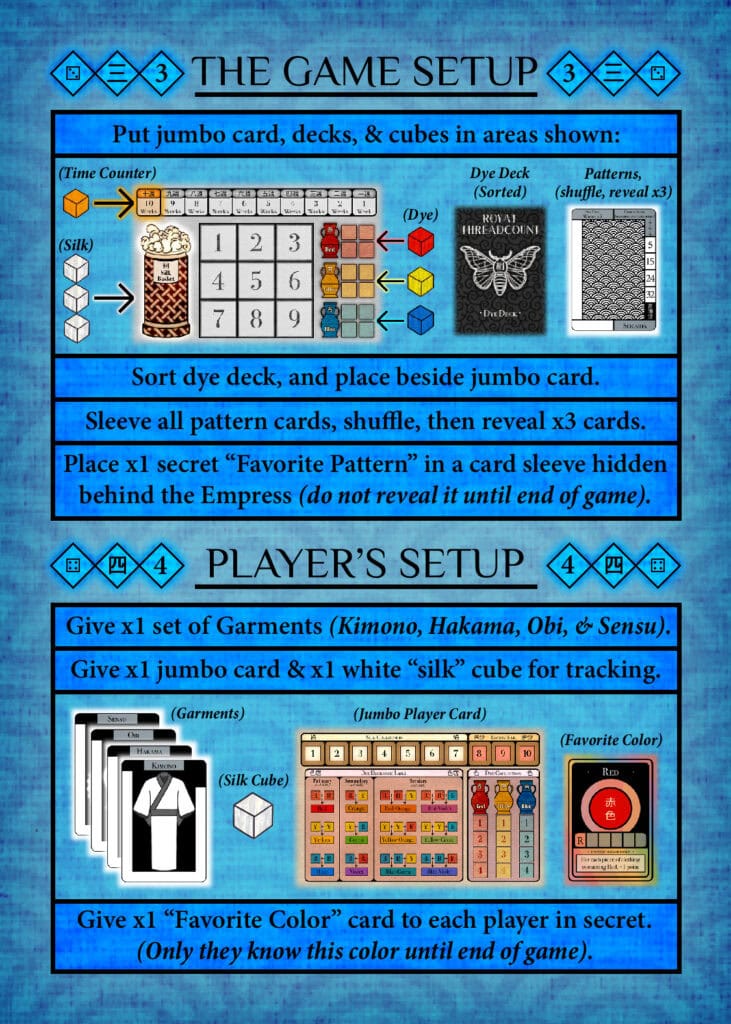
The first couple pages of the rules document are always challenging, because there is such a heavy-duty need for imagery & illustration, and very littler room for words (a constant threat to the design of the rulebook).
I am really happy with how the description of the game came out & the layout of the game components. I had no expectation whatsoever of being able to fit all that information in a pretty way on the first page, but I am satisfied with the results.
The game & player setup information is.. a little tight. I think that it manages to get the information out clearly, but it is relying on a little bit of inference, which always makes me nervous. cutting out repetitive terminology like “give each player ‘x'” is a critical thing to keeping the information concise, but sometimes it can feel like it is not clear enough too. Always a challenging balance to maintain!!!
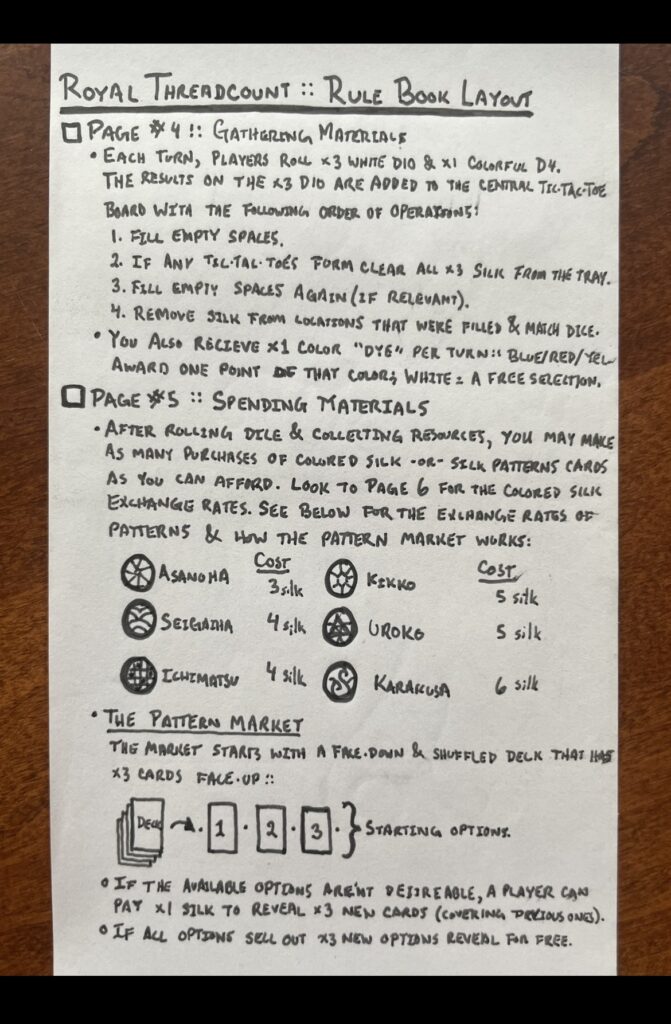
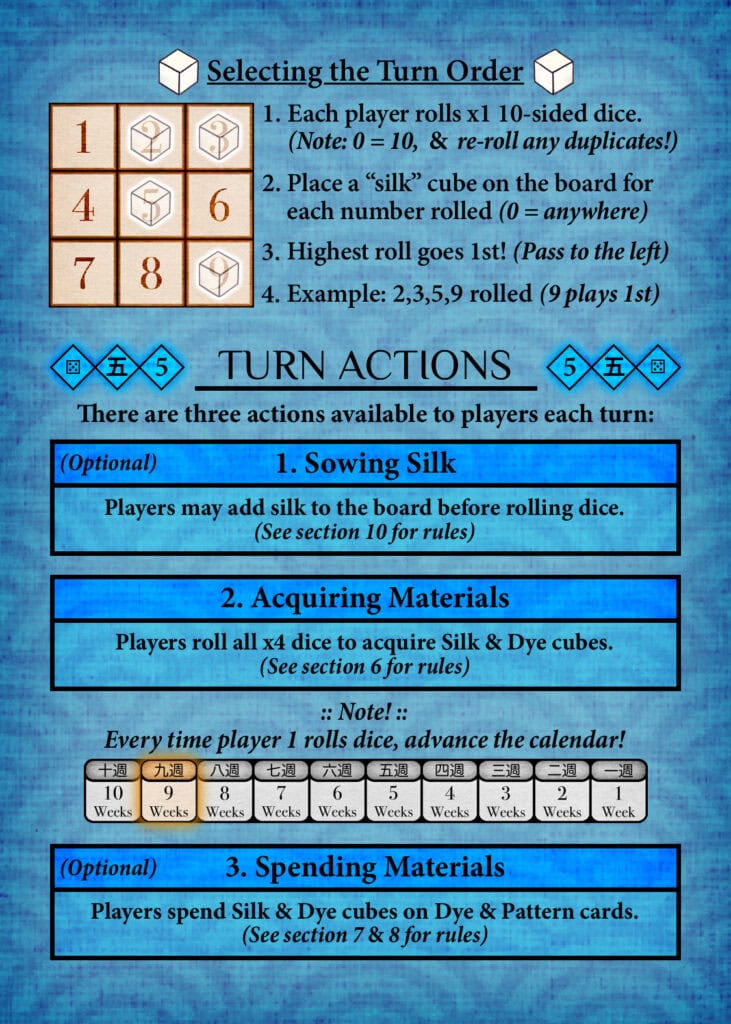
The notes I made do not exactly match 1 to 1 on what we ended up with on the digital side of things, but that is mostly because of hypothesized space vs. actual space in the digital design. Sometimes though, it is because I simply do not think of critically important details that need to be included until I read it about 100 times.
A good example of that issue on these pages is the inclusion of the “Selecting the Turn Order” slice of this page on the left. I couldn’t tell you why I forgot to mention something so important in my paper notes, but that’s just how it goes sometimes.
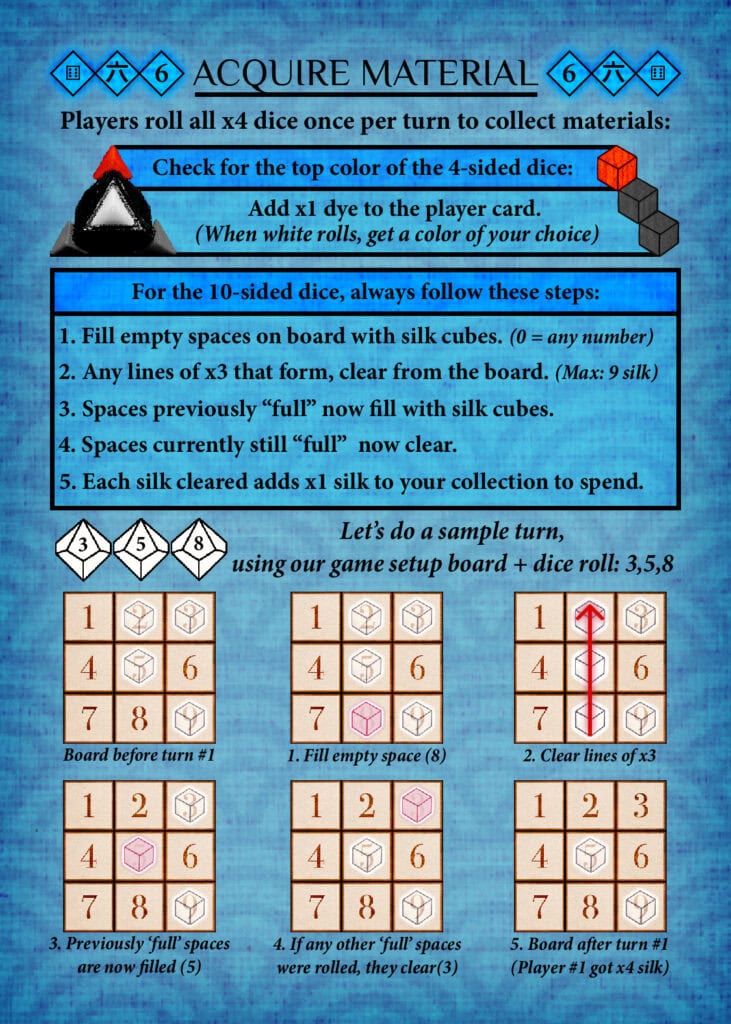
Building the chart for earning silk & dye materials was… very challenging. It is amazing how simple this rule feels when you are playing the game, but how hard it can be to describe it the right way. The fact that there are literally x5 steps to calculating silk outcomes after the dice have been rolled is… crazy to me! But. Being clear on this mechanic is critical, because it is one of the most important aspects to the entire game & definitely cannot be removed or changed now.
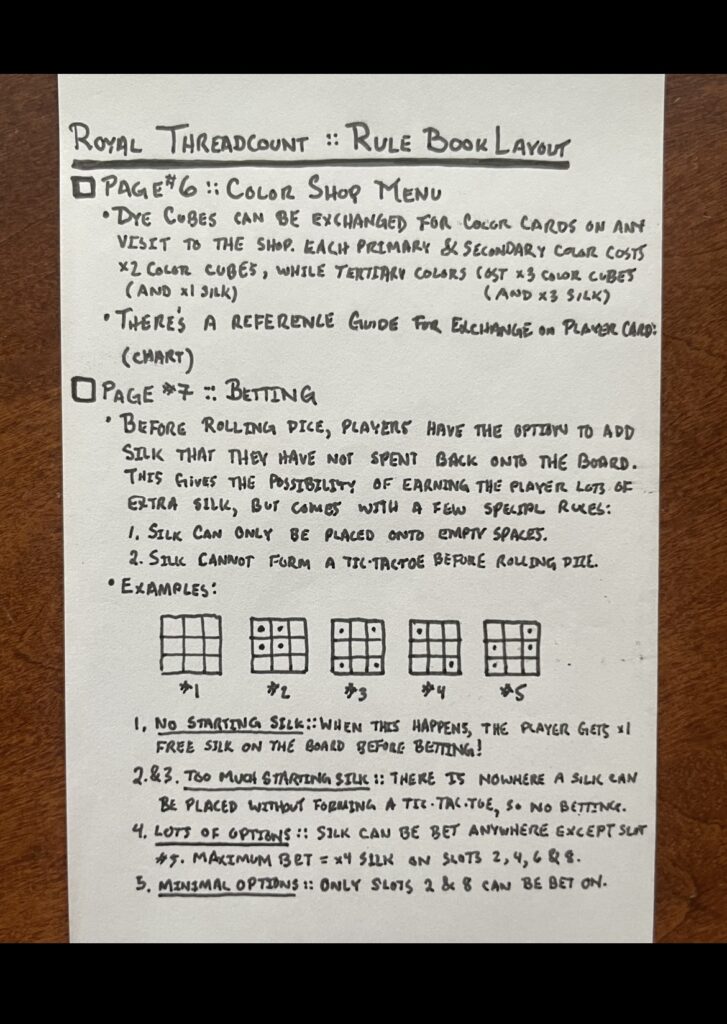
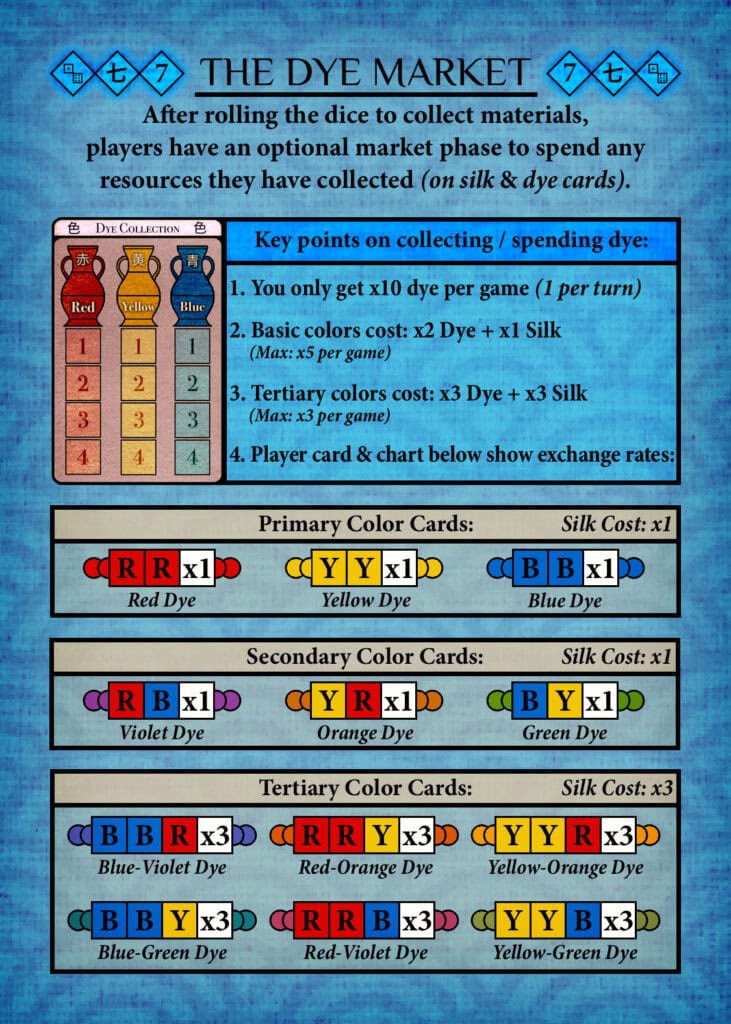
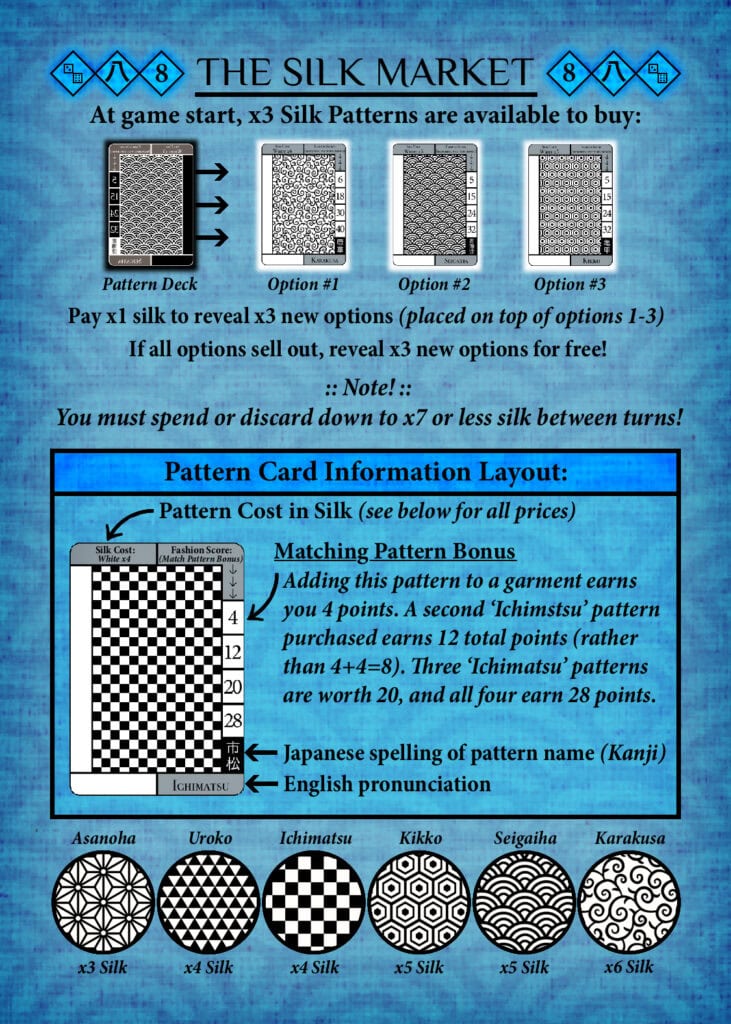
These two pages were probably the most fun to design in the rule book for me. The information shared on these two pages are probably some of the oldest mechanics in the game at this point, and I have explained them countless thousands of times by now. All that really had to be done was drawing them up in a cohesive way!
Not much else to talk about on these pages, but one thing that we haven’t discussed yet in the making of this rulebook was the interesting numbering system that was used. For the first time in any of our existing rules guides, the pages themselves are not numbered… it is the sections of information that are numbered instead.
I didn’t love this idea at first, but then I found it extremely helpful for redirecting information from one section to another (i.e. telling someone to look to section 7 for the information rather than page 7). By numbering the sections instead of the pages, I can send you to exactly where I want you to look for more details. giving just the page number can feel vague sometimes, because there are some pages with multiple sections of information!
(I also thought it was really cool to use: English, Japanese & Gamer-Dice numbers to highlight the sections… definitely a bit overkill on the numbering system, but super cool none-the-less).
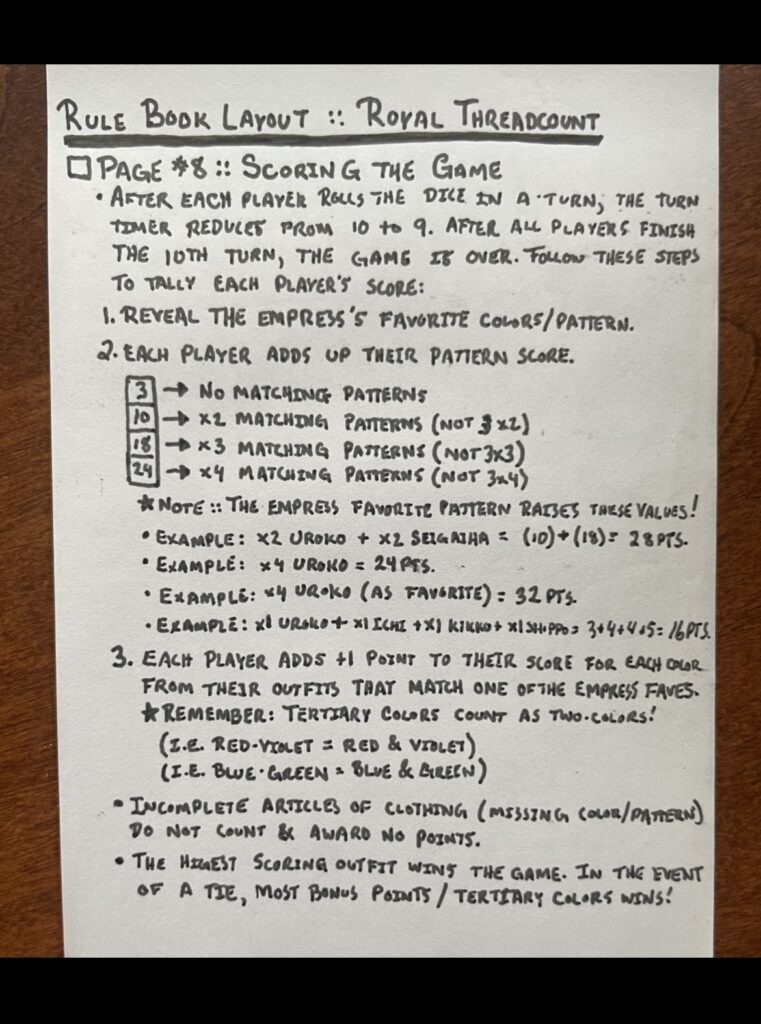
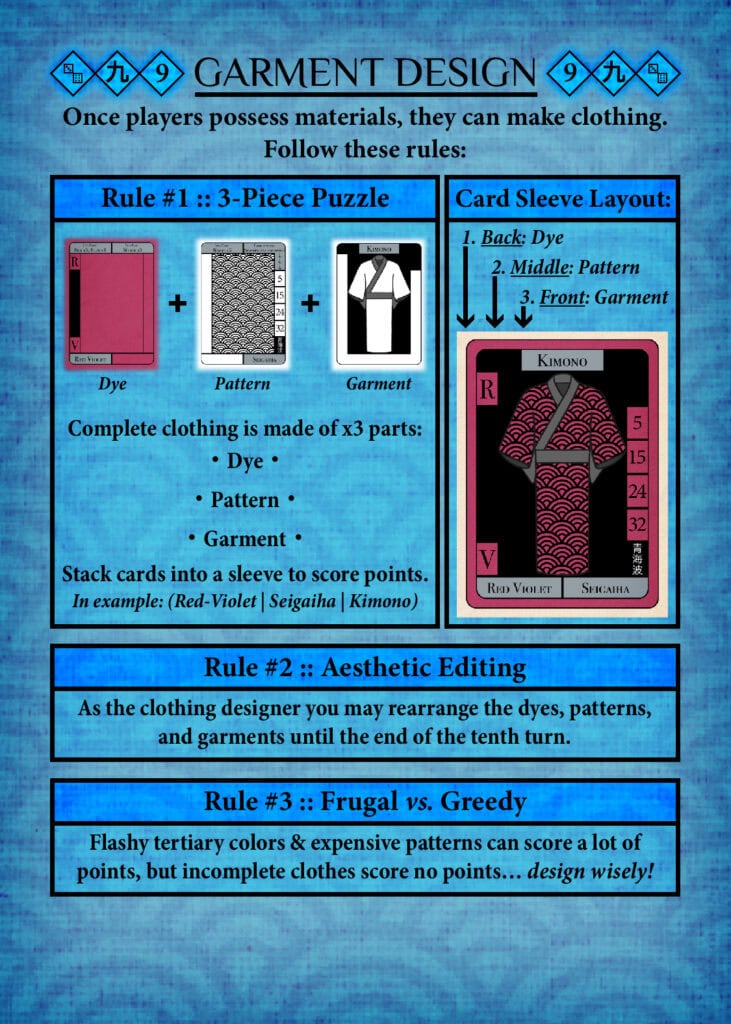
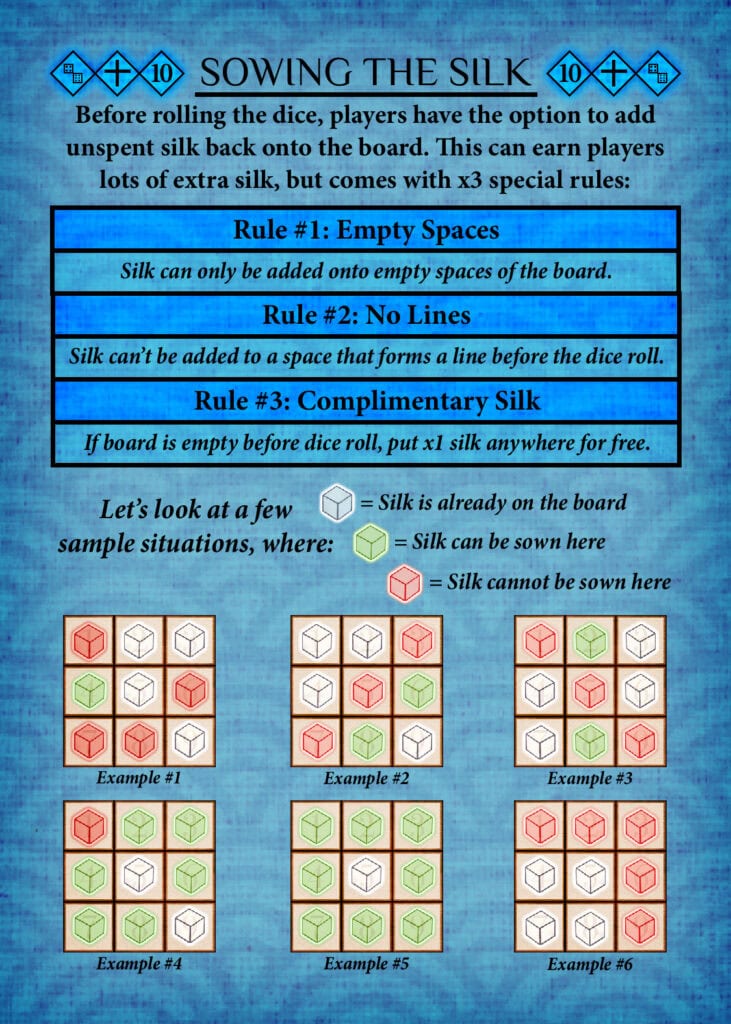
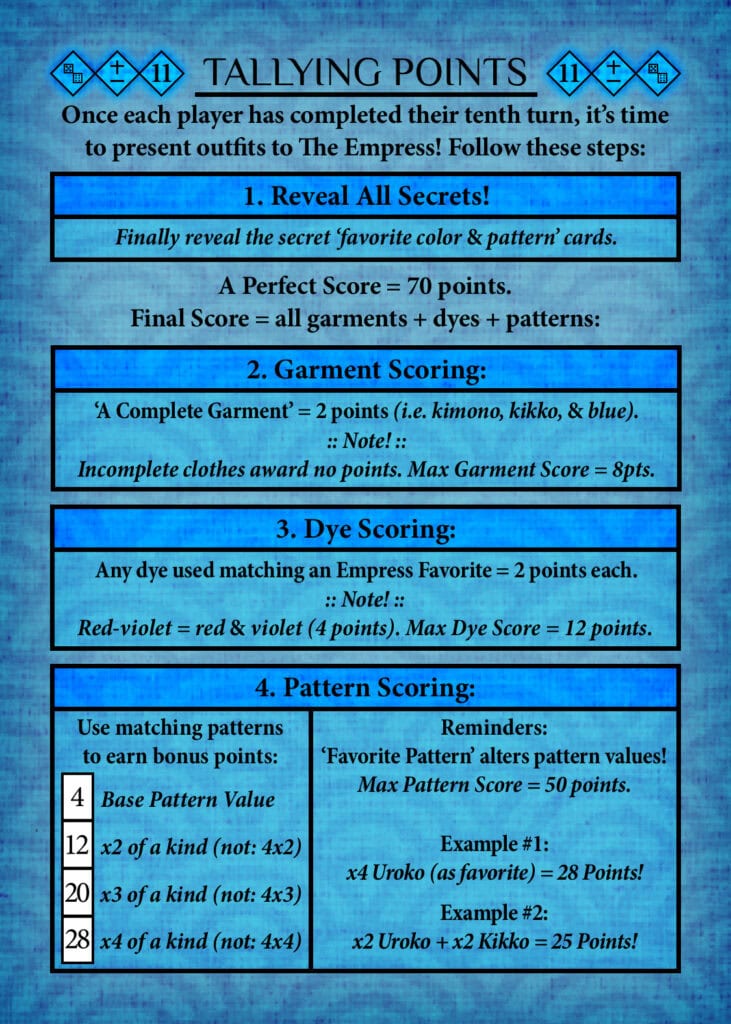
In this slice of the rule book design, it was actually quite a bit challenging to decide where & what order the information was going to be presented.
From my perspective, it was necessary for “Garment Design” to come after the “Gathering Materials” section, but it was a totally different story trying to decide whether this comes before or after the ‘betting mechanic’, now affectionately called “Sowing the Silk”.
Also… does betting come before or after tallying the score of the game? At first I was wholeheartedly convinced that it should come after the scoring mechanics (because it is almost like an optional rule for cheating your way up to bonus materials)… but then the more I thought about it, the less this made sense. It is so necessary for the betting mechanic to be introduced before tallying the score, because when you see the “score the game” rules, you are immediately thinking “I don’t need to read this till later”.
No matter what, the scoring mechanics have to be talked about last.
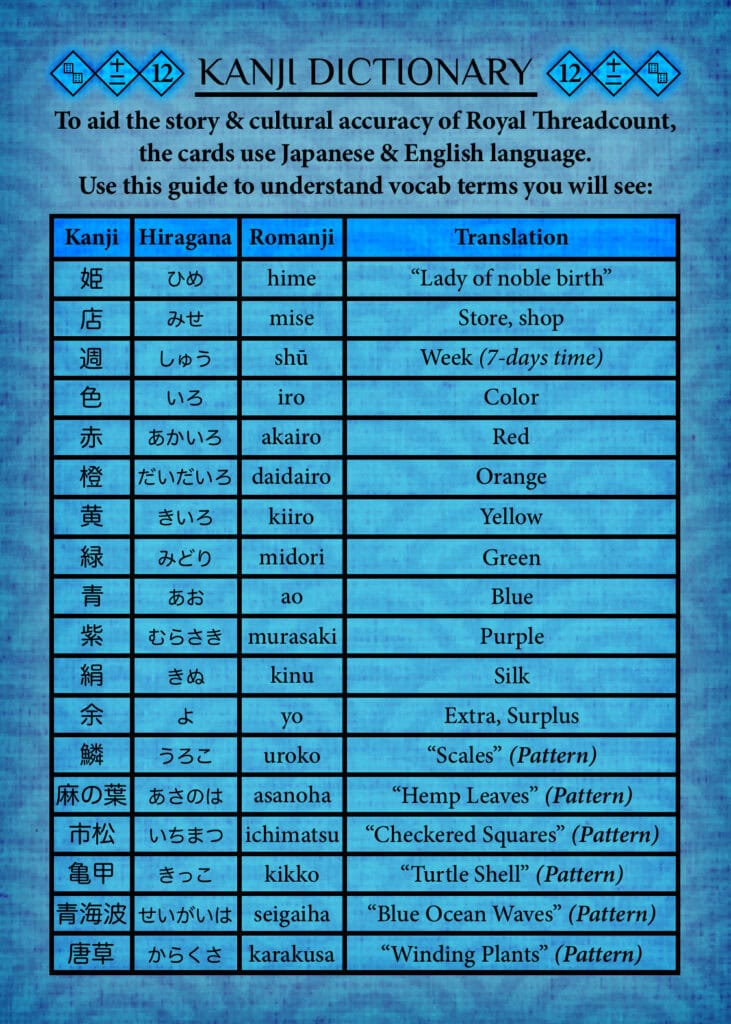
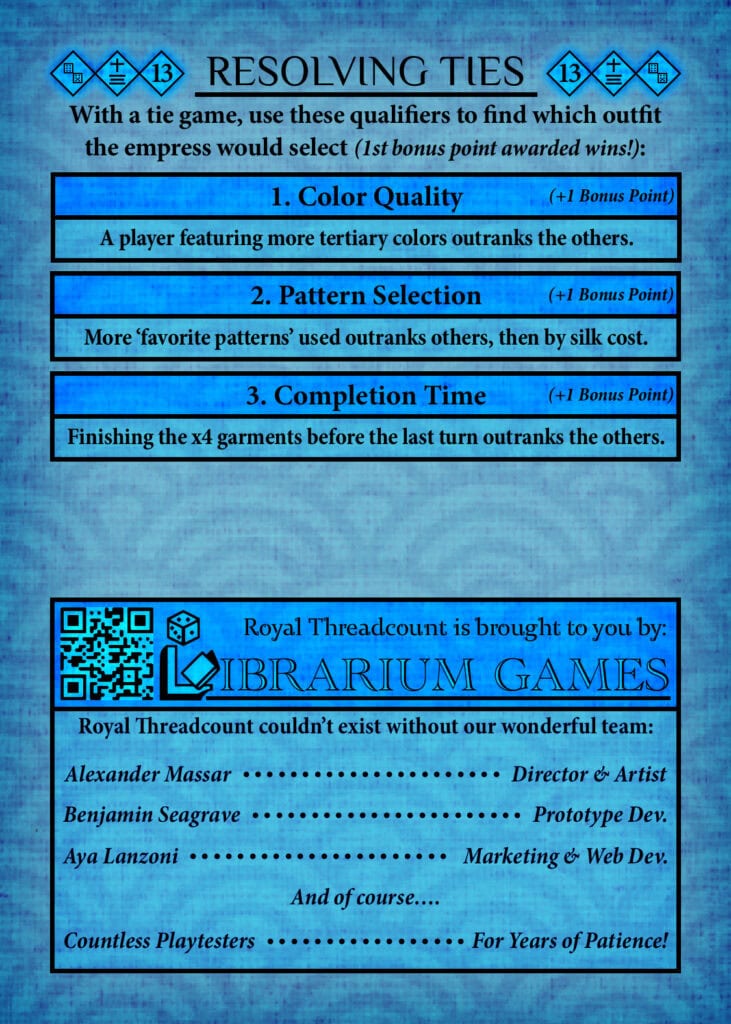
When I set out to design the Royal Threadcount Rulebook, I found it really critical to try and keep the page count under 8 so that we could pay less for it & keep the info short. Unfortunately no matter how many different ways I tried to design it, the digital proofs of the rulebook concretely proved that we needed at least 10 pages to get all the date we needed in there… but rulebooks (in fact all books actually) come in sets of 4-pages… so there is no such thing as a 10-paged book layout.
So… what to do with those extra two pages?
Well, one thing that I thought would be great to add was the Kanji Dictionary. This page alone makes for a super comprehensive place for you to refer back to when exploring the bi-lingual elements of the game. I tried my absolute hardest to hide as much Japanese language as possible into this game, and even though I almost always paired it with the English translations in the designs, I still consider this dictionary a nice addition to the game.
The ‘tiebreaker rules’ was also a bit of a last minute decision. With the countless games of Phoenix Farm that we had played in the two years leading up to right now, I am well versed with people asking for tie-breaker help. Though we had never discussed it up until this point in time, these extra few rules made the most sense to me, and don’t change any of how the game is already played.
Now that we have this first prototype drawn up digitally, its time to ship it over to the Print on Demand service & see how everything turned out. Luckily, this step also already happened. Much of these designs came out great, but there are some fixes that still need to be made to get things to be more legible on the printing side of things. Nothing too crazy, and certainly something I can do on the fly later.
For now, it is time to start looking to our next quest to produce Royal Threadcount: making a custom fabric design for our lovely dicebag maker! Stay tuned for that story soon on the Librarium Games Design Journal, and as always, thank you for reading all my crazy notes!